

Studying giant devil rays through war in Gaza: Interview with Mohammed Abu Daya

Mohammed Abu Daya is a marine ecologist in Gaza. His research focuses on spinetail devil rays, a large-bodied species of ray that roams the Mediterranean Sea and beyond.
Since 2013, Abu Daya has monitored the impact that local fisheries have on spinetail devil rays, which are listed as “critically endangered” on the IUCN Red List. Palestinian fishers occasionally target the rays when they stray into Gaza’s coastal water, as other fishing resources in the area have been depleted due to longstanding Israeli restrictions.
Displaced by Israeli bombings during the war in Gaza that began in 2023, Abu Daya now lives in a tent, with limited access to basic necessities like food and drinking water, or to the internet. His university office has been destroyed, and he can no longer conduct research at sea. Yet he continues to carry out his scientific work, in the hope that it will help improve the conservation of devil rays globally.
In 2025, at the height of the war, Abu Daya co-authored an international research paper documenting the behavior of spinetail devil rays and showing the importance of the Levantine region for the conservation of this species.
This interview was originally written by Lyse Mauvais appeared on Mongabay, an independent media organization bringing you news and inspiration from nature’s frontline.
On the messaging platform WhatsApp, Mohammed Abu Daya’s profile picture features an aerial view of Gaza City before the current war. A clutter of high-rise buildings rises against the sky; at their feet, a strip of sandy beach, bathed by the sun, and the dark blue sea, dotted with small fishing boats.
The photograph bears witness to a landscape that no longer exists — aside from the sea. “Gaza is now a big prison, with two million people living among rubble and destroyed infrastructure,” the Palestinian marine ecologist told Mongabay in May 2026 over the phone. “Life in the Gaza Strip is miserable.”
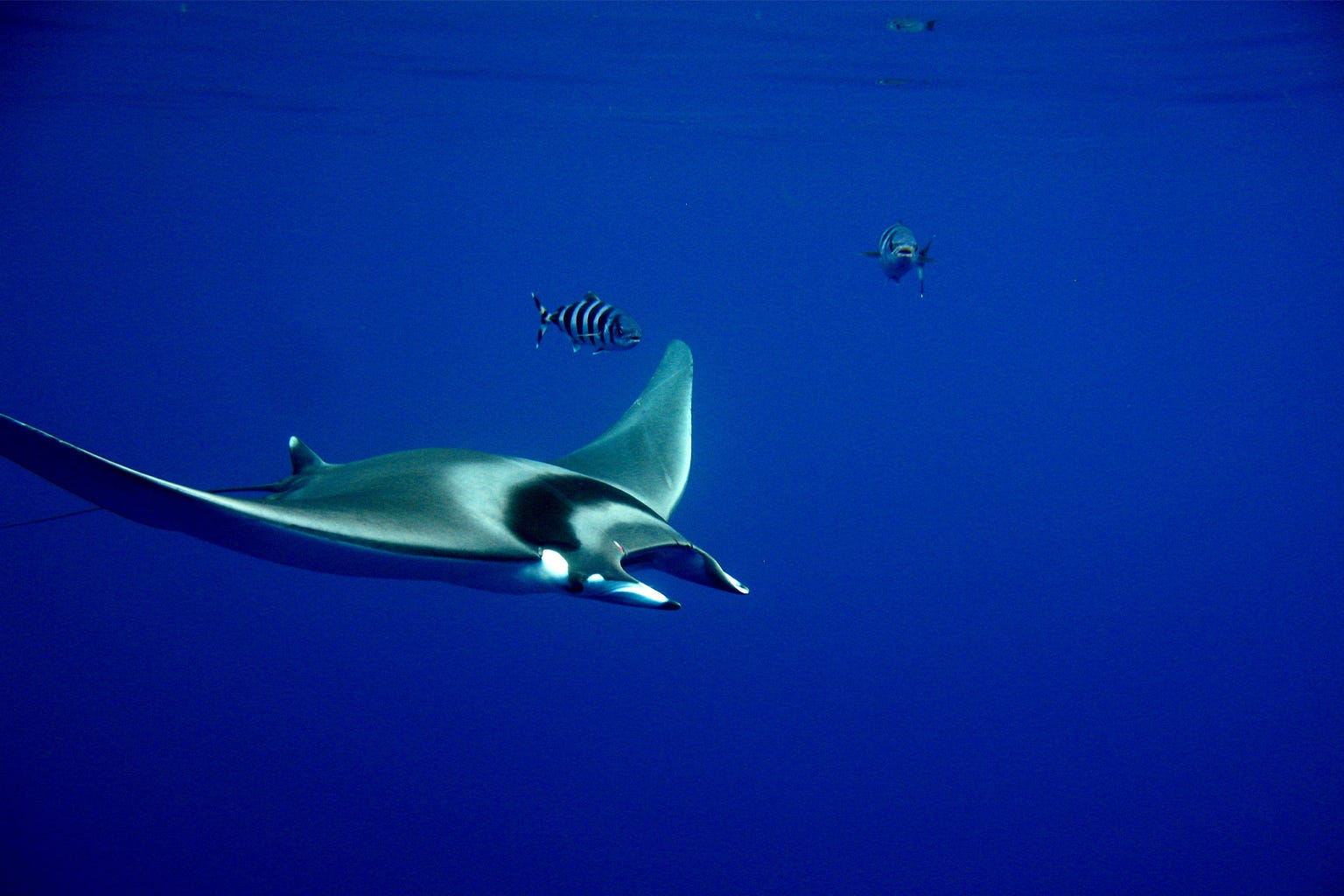
For many months now, he has been unable to go out to sea to carry out research in his field. Before the war, Abu Daya was a lecturer at several Palestinian universities including the University of Palestine in Gaza and a researcher at the now-shuttered National Research Center in Gaza. His research focuses on spinetail devil rays (Mobula mobular), sometimes called giant devil rays, a critically endangered species that can reach up to 3.5 meters (11.5 feet) in width.
The Gaza-based conservationist is one among a handful of scientists worldwide who study this species. Historically, it was thought to be endemic to the Mediterranean Sea, until taxonomic revisions in the late 2010s led scientists to consider the Mediterranean populations as genetically connected to others in the Atlantic Ocean, the Caribbean Sea and the Indo-Pacific region. The majestic rays are thought to roam the entire Mediterranean, from the shores of Syria, Israel and Gaza in the East, all the way to the beaches of France, Italy and Spain in the West. But until Abu Daya’s contributions, most scientific knowledge about them relied on fieldwork carried out in the Western Mediterranean.
“As far as I am aware, nobody else has specialized on these animals in the Eastern Mediterranean,” marine conservation ecologist Giuseppe Notarbartolo di Sciara, an expert in Mobula taxonomy and co-founder of the Milan-based Tethys Research Institute, who has collaborated with Abu Daya, told Mongabay. “For animals that spend part of the year in this part of the sea, having someone from Gaza who is so interested in this research is very important.”
Over the past three years, Abu Daya has lost his home, his office and access to his beloved sea. But he never lost his fascination for devil rays: As he’s moved from one refuge to the next, the scientist has continued to analyze data collected in previous years, to attend international conferences remotely and to co-author publications. One study, tracking devil rays’ migratory routes across the Mediterranean, was published in 2025, at the height of the war.
Mongabay spoke with Abu Daya during three separate phone interviews over WhatsApp in May and June, and followed up with some additional questions via email. This interview is a compilation of those exchanges, edited for clarity and length.
Mongabay: Tell us about yourself. How did you become one of the world’s leading specialists on spinetail devil rays?
Mohammed Abu Daya: I grew up in Gaza, on the eastern coast of the Mediterranean Sea. This is where I learned to love the ocean. This love for the sea only grew stronger during my studies: I specialized in marine and coastal studies, pursuing my master’s degree in the Netherlands, and my Ph.D. at the University of London.
This experience set the course I would follow all my life, to protect and conserve marine creatures and their habitats. Over time, my research on sharks and rays became everything to me. Someone once told me: “Mobula rays and Mohammed are busy thinking about each other all day.”
One of the people who had a great influence on me, and through whose support I decided to study marine sciences, was my Ph.D. supervisor and friend, Professor Rupert Ormond. He supported me with guidance, explanations and continuous follow-up. From him, I learned practical research methods. Whenever he went on a field trip, whether within the United Kingdom or abroad, he always made sure to include me. I am deeply grateful to him.
Mongabay: Your close relationship to the sea mirrors the importance that the Mediterranean Sea, and its fishing resources, have for the people of Gaza. Can you tell us about this?
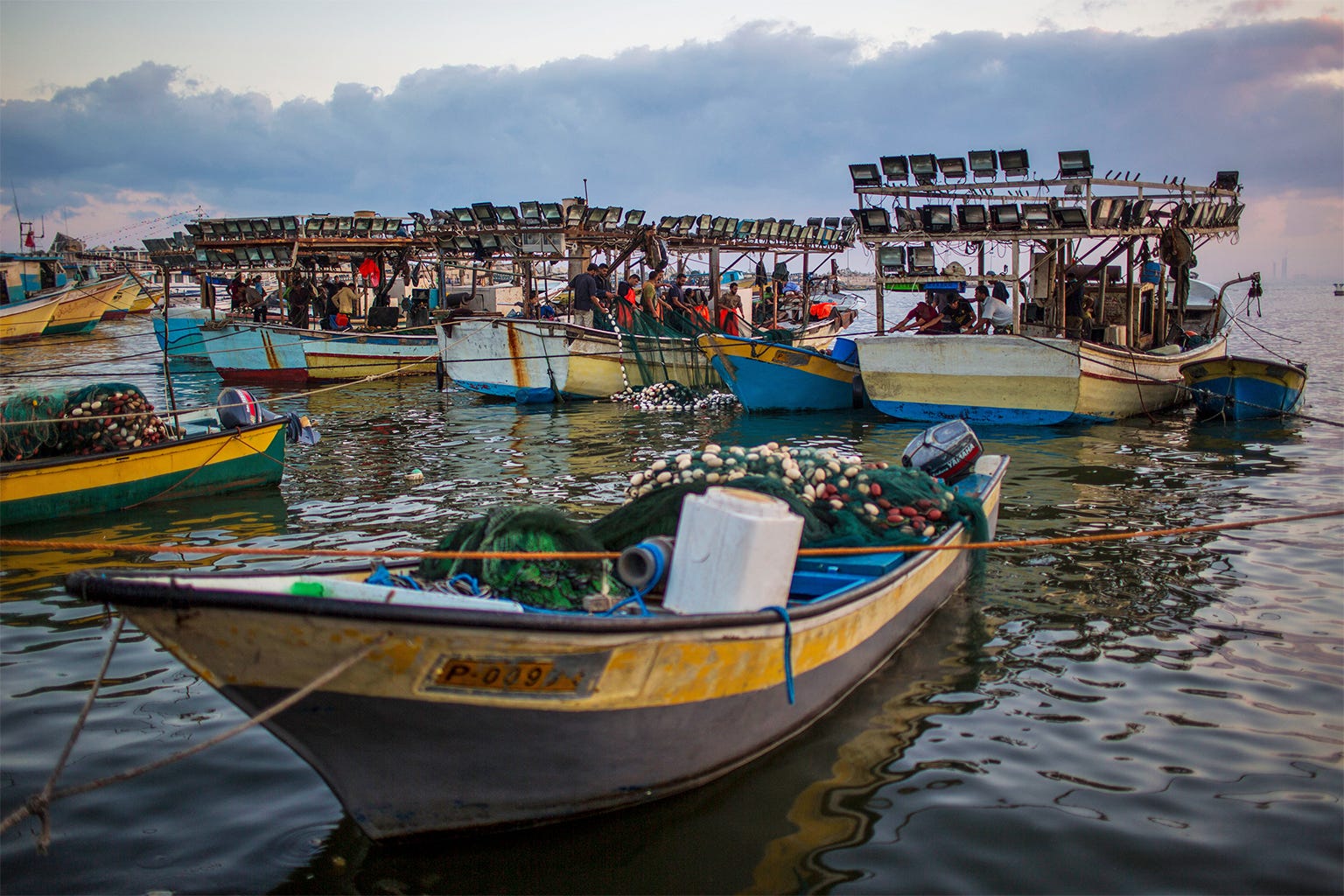
Mohammed Abu Daya: The Gaza Strip is an area that relies heavily on marine resources for its food. Before the start of the most recent war, on October 7, 2023, there were about 3,500 fishermen on more than 700 active vessels in the Strip. And there were another 2,500 people working in relation with the fishing industry.
But even then, the situation was already very difficult for fishermen. They were only allowed to fish six nautical miles offshore. Since the war, it has only gotten worse. All fishermen are unemployed, and all the fishing vessels have been destroyed.
Mongabay: The situation was also difficult for Palestinian scientists and conservationists like yourself.
Mohammed Abu Daya: Before the October 7 attacks and the devastating war that followed, our reality was shaped by blockades, instability and severe restrictions. We faced frequent electricity cuts, limited access to clean water, shortages of essential materials and constant uncertainty.
For Palestinian conservationists and scientists, these conditions created major professional obstacles that colleagues in Europe or the United States have rarely faced. Opportunities for travel, academic exchange, field research, training and participation in international conferences were restricted or denied altogether. Access to scientific equipment, funding, laboratories and even reliable internet and electricity was inconsistent, making long-term research planning extremely difficult.
Despite these challenges, Palestinian researchers continued to work with remarkable resilience and commitment.
Mongabay: There are very few scientists worldwide who study Mobula mobular. Can you tell us about your role, not only in advancing global research about devil rays, but also in helping protect them locally?
Mohammed Abu Daya: The giant devil ray Mobula mobular is classified as endangered on the IUCN Red List of Threatened Species since 2018, [a listing updated to “critically endangered” in 2025]. It has been protected under Annex II of the Barcelona Convention since 1996.
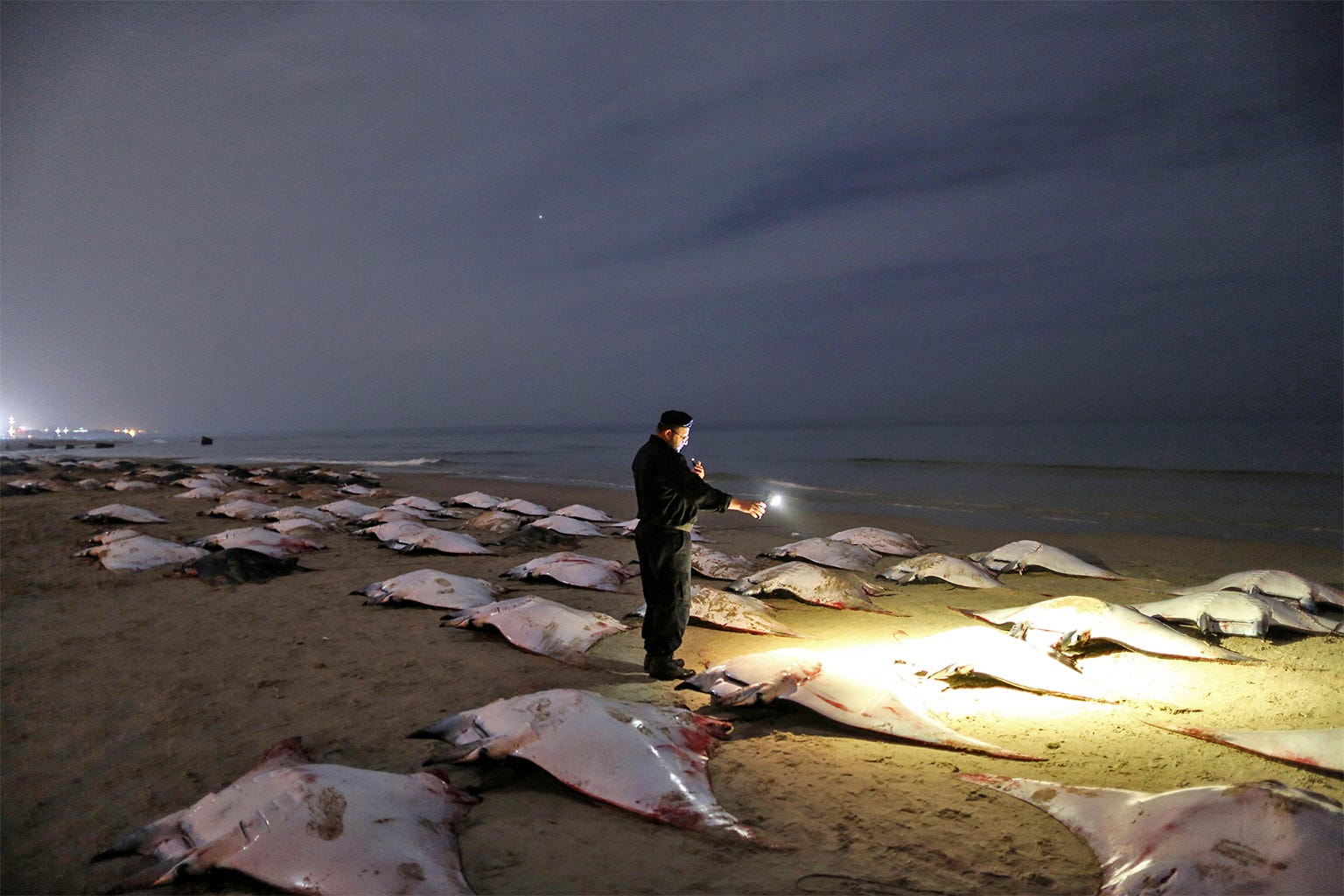
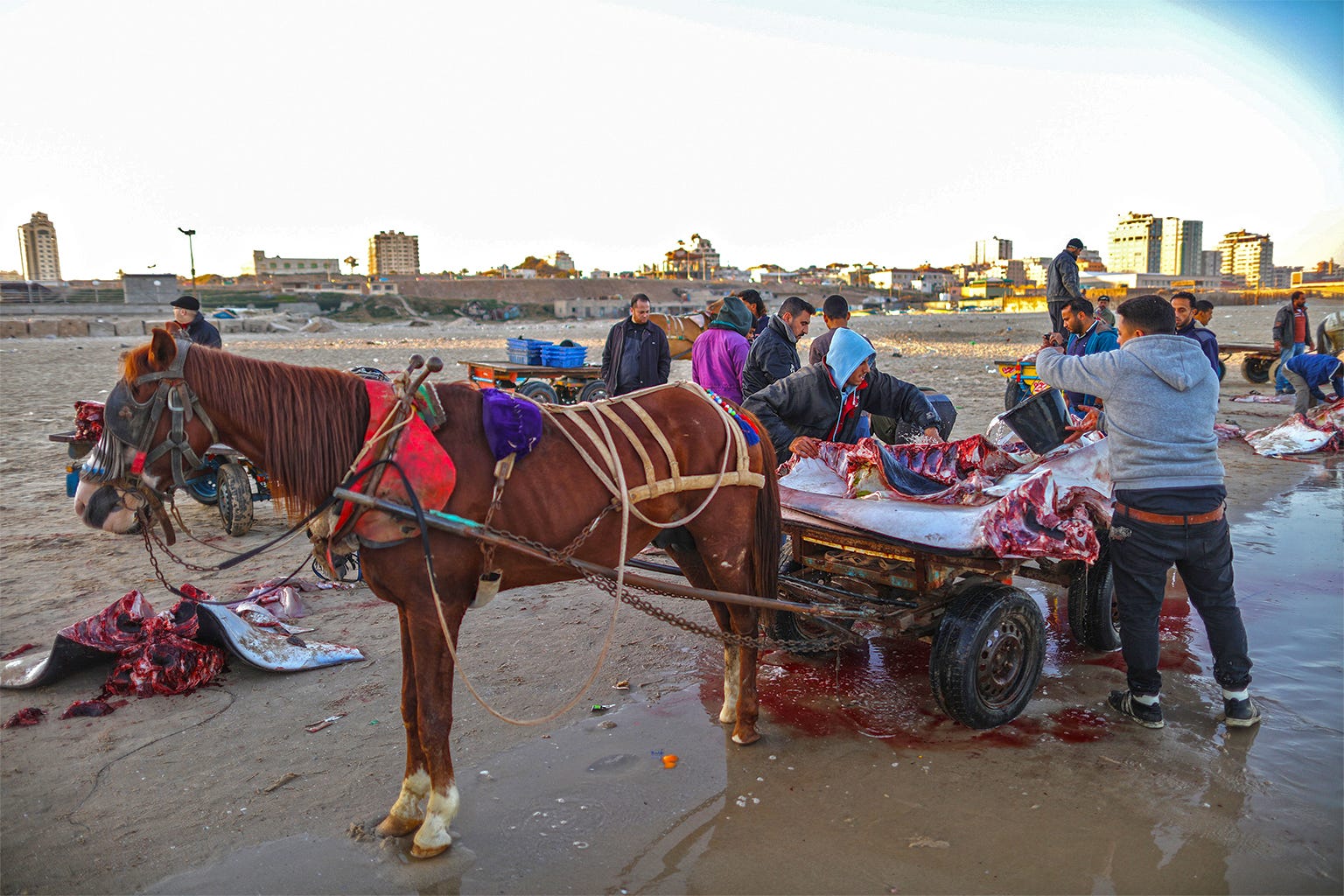
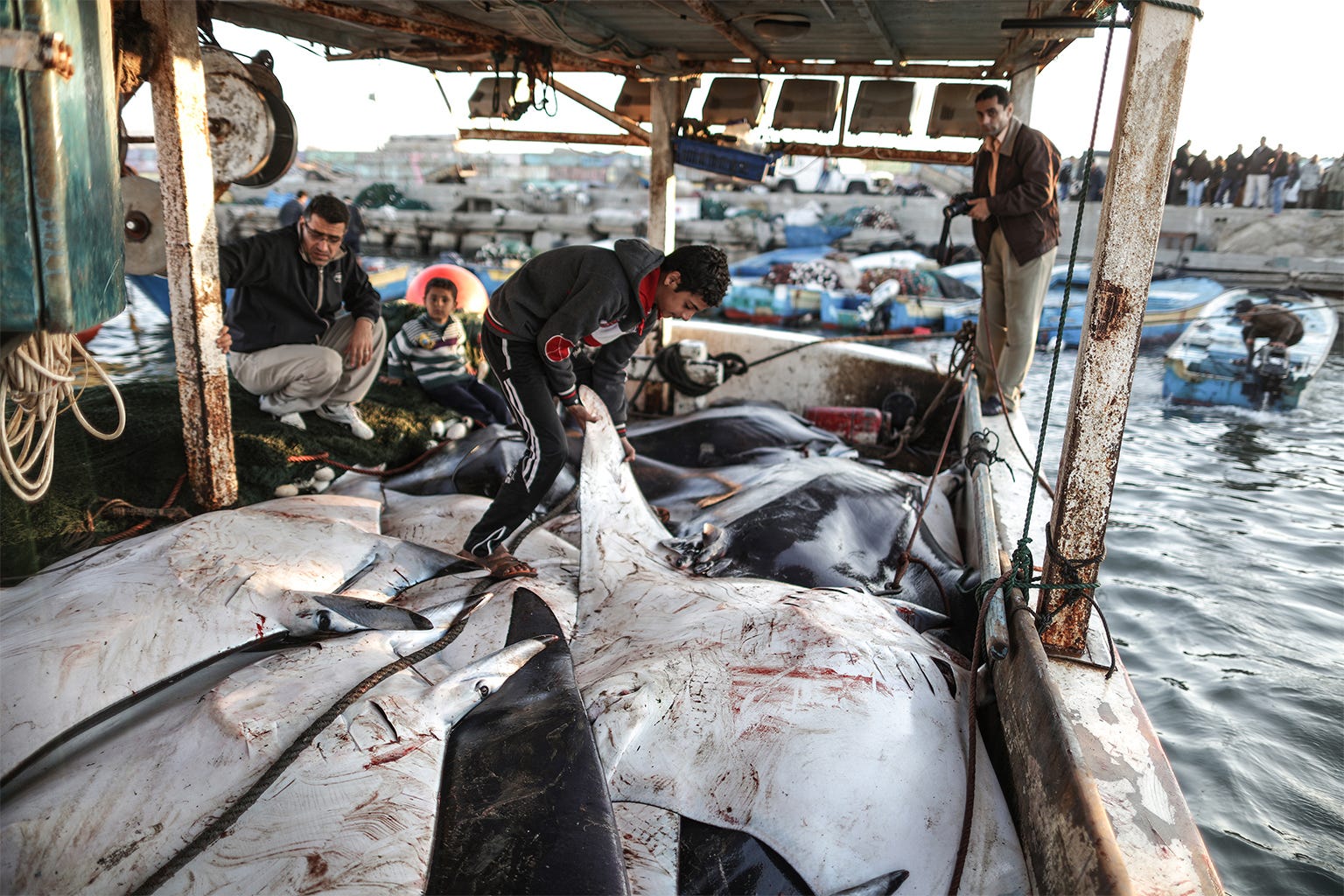
Despite this, Palestinian fishermen massively targeted giant devil rays in 2013, catching several hundred individuals off the coast of Gaza. This was linked, in part, to the situation locally. Although small, the Gaza Strip contains a rapidly growing human population. Trapped on a small territory, people rely on limited natural resources, [which are even more strained] due to the poorly developed infrastructure that causes serious pollution problems, the deterioration of habitats and a decrease in fish stocks.
In 2013, a large group of devil rays ventured very close to the shore, which is relatively rare. At the time, fishermen were under particularly intense pressure to maximize available catch because of poverty, unemployment, the high price of fuel needed to run their boats and declining fish stocks (linked to overfishing). In previous years, devil rays had not been targeted frequently, because fishermen had been allowed to access a larger fishing area at sea where other species were available. But as Israeli authorities restricted the area that fishermen were allowed to venture into, pressure to catch any species found in the coastal waters grew.
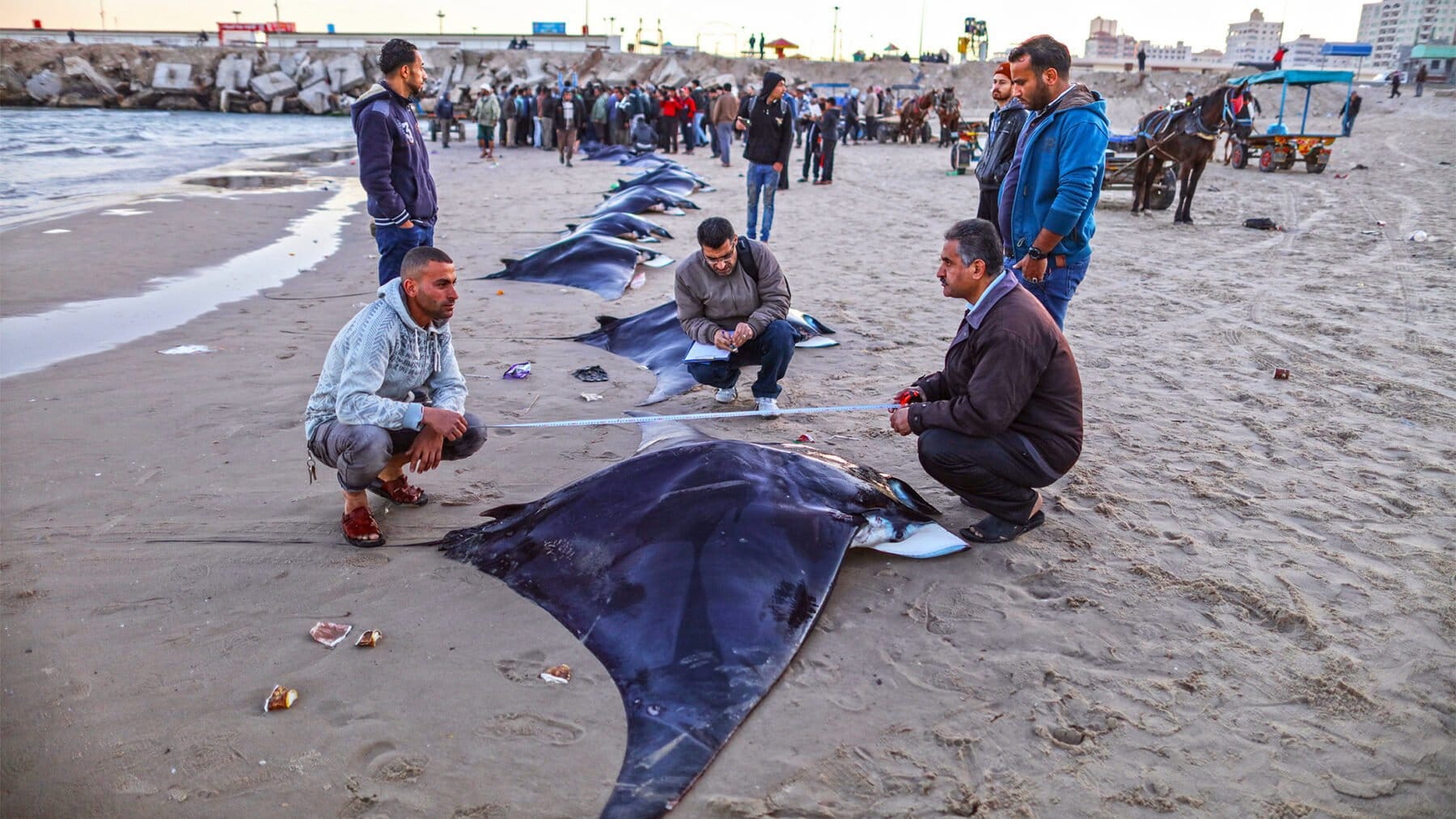
Following this massive fishing of giant devil rays off Gaza’s coast, which attracted a lot of media attention — even internationally — I got involved in an international research project in collaboration with two experts, Giuseppe Notarbartolo Di Sciara and Daniel Fernando [a marine ecologist, co-founder of the Sri Lanka-based Blue Resources Trust and associate director at the U.K.-based Manta Trust]. It was funded by the [Swiss conservation nonprofit] Save Our Seas Foundation. It was the first time I received financial support from abroad, for my work on mobulas.
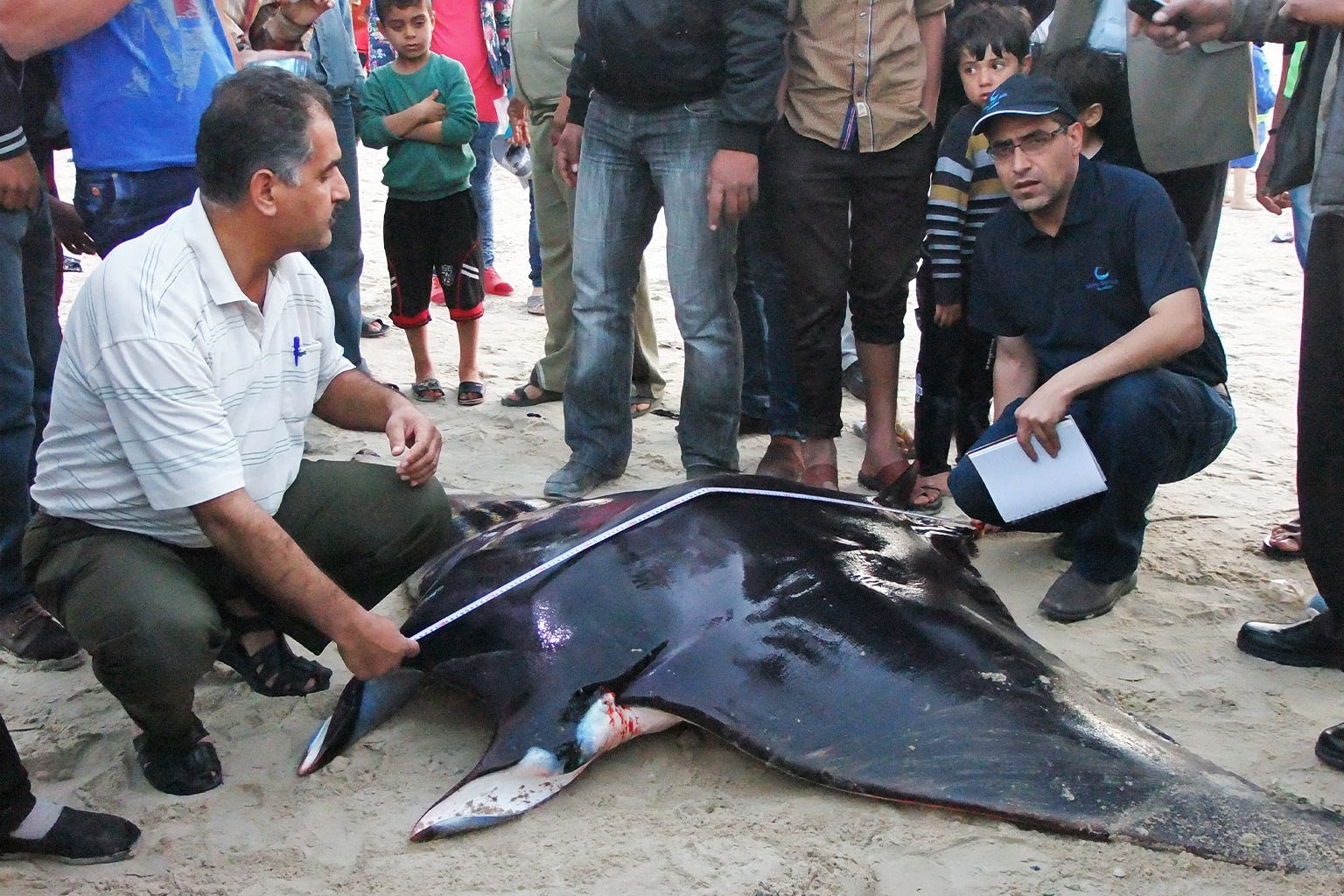
Initially, our goal was to provide much-needed baseline information on fishing activities in Gaza. The lack of accurate data on fisheries that target devil rays and other species of the same family undermined any effective assessment of their conservation status. We tried to identify the main fishing methods used, when and where fishing boats are active. We monitored landing sites and fish markets in Gaza, surveyed the routines of many active fishermen and collected information about past catches. In parallel, the project also raised awareness about conservation in the local community. We organized public events to inform fishermen about species conservation issues, and we shared with them our findings about the status of fishing resources in the area.
We concluded that the large fishing operations that target giant devil rays in this region probably limit the ability of its population to recover. And that considering its endangered status globally, the species may become extinct if no regulations relating to its protection in the Mediterranean are implemented in Gaza.
Mongabay: In 2025, at the height of the war, another paper you co-authored was published, Insights into spinetail devil ray spatial ecology in the Mediterranean Sea through satellite telemetry. What were your key findings this time?
Mohammed Abu Daya: In collaboration with Giuseppe Notarbartolo Di Sciara and other distinguished experts, with funding from the MAVA Foundation [a Swiss conservation foundation that closed in 2022], we investigated the seasonal migratory behavior of Mobula mobular across the Mediterranean Sea.
We tracked nine individuals between 2016 and 2021. One individual, whom I personally tagged off Gaza in March 2016 with the help of local fishermen, undertook an extraordinary journey to Spain before returning to the Levantine Sea one year later.
Our findings provided strong evidence that this species undertakes predictable migrations across the Mediterranean Sea, with a marked preference for Levantine waters during late winter and early spring. These findings have implications for the conservation of this species: They can help better target conservation measures and fishing regulations.
Mongabay: By the time this paper was finalized, your life had changed dramatically. You lost your home, and your family was displaced several times. How did you keep working in these extremely difficult conditions?
Mohammed Abu Daya: Everywhere I go — at home, work and university — I never stop talking about mobula rays, about what we should do to protect them in Gaza, to let them enjoy their visit to the Eastern Mediterranean in safety. My interest in marine ecology has always been driven by this strong sense of responsibility towards vulnerable marine species. Even under challenging conditions, I try to focus on the long-term value of our work for regional marine conservation.
Today, despite living in a war zone and being displaced several times, my commitment to research remains rooted in my deep passion for marine ecology. I believe that scientific knowledge is a tool for resilience and hope. It has become more than an academic pursuit: It’s a source of purpose, stability and continuity during an exceptionally difficult period.
Mongabay: What does your life look like today, in 2026? Do you have any ongoing research projects?
Mohammed Abu Daya: My situation is no different from that of the vast majority of people in Gaza. Every day, we struggle to secure drinking water, water for washing, and food. Many people are now living in tents. Life has become extraordinarily difficult.
Professionally, my life is now shaped by two principles: Resilience and determination. My scientific work continues remotely, and whenever circumstances permit, in the field. But all universities have been destroyed; libraries have been destroyed; fishing boats have been destroyed. Students are taking classes in tents, under tarpaulin sheets. And it is impossible to access the sea. You can get close to the beach, but you cannot get inside. Even fishing activities are not allowed.
Still, I continue collaborating with international researchers and conservation experts, as much as I can. Remote work has become essential: I continue to participate in publications, technical discussions and regional conservation. Although I was unable to attend in person, I recently delivered two remote presentations at two major conferences: The European Elasmobranch Association Conference in Greece in 2024, and Sharks International in Sri Lanka in 2026.
Currently, I am collaborating with several international experts on a new manuscript, which is presently in its final round of review among co-authors. The article brings together existing information on the relationship between body size and weight in manta and devil rays from around the world. It aims to improve understanding of how these species grow and develop, to support better monitoring, conservation and fisheries management efforts.
Mongabay: Is there something you would like to share with fellow scientists and conservationists abroad?
Mohammed Abu Daya: Science and conservation should always remain bridges that unite people, rather than divisions shaped by politics or conflict. Scientific research is a universal language built on collaboration, mutual respect, and a shared responsibility to protect our planet and its biodiversity.
No war or political circumstance should interrupt the pursuit of knowledge or prevent researchers from contributing to the global scientific community. I firmly believe that people everywhere deserve to live in peace, dignity and understanding, and that through love, cooperation and open scientific exchange, we can build a better future for both humanity and nature. Even in the most difficult circumstances, the commitment to knowledge, conservation and peace must endure, because science has the power not only to advance discovery, but also to remind us of our common humanity and our shared duty to protect life in all its forms.
Banner image: Mohammed Abu Daya, center, measures one of several spinetail devil rays (Mobula mobular) caught in Gaza in 2016, after spending time at sea collecting data with the fishers who caught them. Image by Wissam Nassar, ©Save Our Seas Foundation.